
In the last few years, there have been many changes in how people borrow money. People are looking for loans that allow them to get their application submitted online quickly, receive approval quickly, get updates as soon as they happen and have seamless communication throughout the loan process. However, at the same time, banks and credit unions are under pressure to cut costs, follow regulations and process more loan applications with fewer employees.
This is why a mortgage loan operating system is such an essential part of a lending company’s success. A LOS can improve the efficiencies of all stages of the lending process from application, approval, and closing. Whether you are a banking institution, credit union, or an online lender, an LOS will help you improve your speed, accuracy, customer experience and overall operations.
In this guide, we will define what an LOS is; explain how it works; and why it is one of the most important tools in modern lending in 2026.
What is a Loan Origination System?
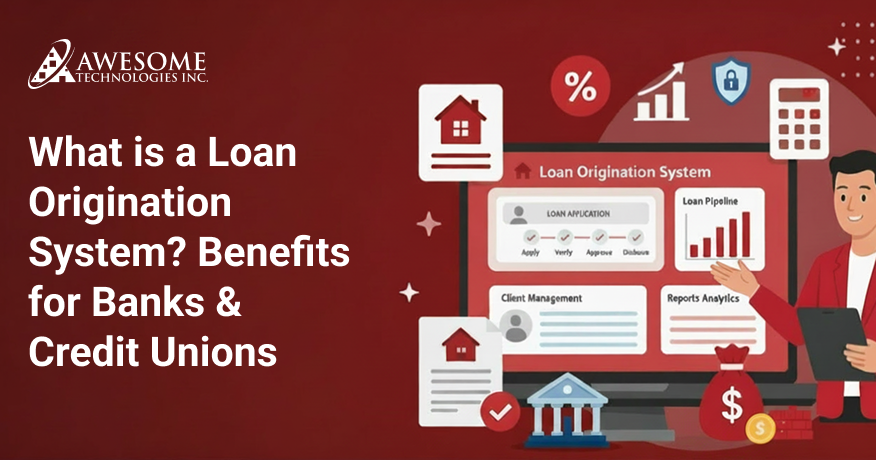
The Loan Origination System is a software designed to automate and manage the complete lifecycle of a loan from start to finish. It provides lenders with the ability to collect information about borrowings, verify documents provided by the borrower, analyze risk and calculate: underwriting results, generate disclosures, manage approval authority, and fund loans all in one central platform. Simply put, the LOS in banking serves as the functional backbone of modern lending today.
Instead of using spreadsheets, emails, and doing things by hand, banks and credit unions use enterpriseLoan Origination Systems (LOS) to make the whole lending process easier and faster, so loans don’t get delayed.
There is a wide range of loan types supported by today’s LOS system such as:
- Mortgages (including 2nd mortgages) and HELOCs
- Personal loans and auto loans
- Commercial & industrial loans and business lending through a modern commercial loan origination system
- Student loans and other newly introduced specialty financing products.
What is LOS in Banking?
A Loan Origination System (LOS) is a software that banks use to manage the complete loan cycle (from start to finish) from when someone applies for a loan until that loan has been approved & funded. It automates processes & workflows to eliminate manual errors, ensure compliance with regulations, accelerate the decision-making process to process larger amounts of loans than ever before.
Why Loan Origination Systems Matter in 2026?
Today’s borrowers want the digital experience with their lender that they currently get from an e-commerce site or mobile banking app. Research from McKinsey shows that customers now prefer digital lending experiences, especially when it comes to applications and approval. If your institution cannot deliver that experience, borrowers will turn to a competitor who happily offers it.
At the same time, manual lending processes create many ongoing operational problems. The table below shows how common pain points in legacy workflows directly hurt institutional performance:
| Lending Challenge | Impact on Banks and Credit Unions |
| Manual data entry | Increased time to approve loan applications as well as higher errors |
| Compliance complexity | More risk and exposure to an Audit or Regulatory |
| Disconnected systems | Workflow issues due to lack of visibility |
| Paper-based processes | Increased cost and rework associated with loan application processing |
| Delayed approvals | Poor overall borrower experience resulting in loss of borrowers |
| Staffing limitations | Inability to scale up during peak cycles and periods of growth |
To address these challenges, a modern LOS for mortgage lenders has the capability to automate the workflow, connect with third-party partners, provide automated verification via AI, and centralize data.
The 7 Stages of the Loan Origination Process
An enterprise LOS system is capable of handling many issues through the use of workflow automation, third-party integrations, AI-driven verifications, and centralized data management. This will become clearer as we look at the loan origination process in detail.
1. Loan Application
A borrower applies by submitting their personal, employment and financial information. With modern LOS, there is a full online application, mobile-friendly to fill out, with automated data capture, documents can be loaded, and e-signature will replace the complete paper-based application method.
2. Document Collection
The borrower must now upload all documentation, such as pay stubs, tax returns, bank statements, and ID. OCR and AI technologies can automatically extract and validate much of the borrower data, reducing manual review time. Therefore, it will reduce the total amount of time required for manual reviews.
3. Pre-Qualification & Verification
The system verifies the borrower’s income, employment, credit score, DTI, identity, and assets. This allows lenders to help identify fraud before the loan underwriting, reducing the overall number of loans subject to fraud. It will also allow the lender to make an informed decision as to how to underwrite the loan before they invest time and resources in the process.
4. Underwriting
Underwriting of loans helps to establish if there is enough default risk related to the loan by evaluating the data of the potential borrower against the lender’s lending conditions. Many LOS platforms automate portions of underwriting through rule-based decision engines and integrations with credit and risk assessment tools.
5. Loan Approval
The approval process begins after the lender has reviewed the customer with respect to all loans required conditions. The LOS system dashboard allows managers to monitor requests instantly in real time. Thus, it speeds up the overall process and reduces long email chains with too many overdue requests.
6. Documentation & Compliance
The loan origination system takes care of all the loan disclosures, closing documents, compliance forms, and detailed audit trails automatically. This stage will help reduce documentation errors and also supports regulatory compliance.
7. Loan Funding
After all documents are signed and verified, funds are released. The mortgage loan operating system records everything throughout the process, and stores final loan information securely, providing a full-fledged record for any future reference or regulatory review.
Key Features of a Modern Loan Origination System
Not all mortgage loan operating systems are the same, but the leading systems share a core set of capabilities that separate them from legacy alternatives.
- Automated Workflows
The ability to automate processes reduces the need for people to perform repetitive tasks like entering data, updating the status of loans, sending emails, assigning tasks, and reminding others about compliance. This enables lenders to increase their productivity across all teams who are involved in lending, and reduce the chances of errors.
- Digital Borrower Portal
Having access to a digital borrower portal allows borrowers to apply for loans online, upload required documentation, check the status of their loans, communicate with lenders, and electronically sign documents. As such, borrowers benefit from a useful experience and will make fewer calls to inquire about their loan.
- Third-Party Integrations
Many lenders also use Encompass integration services for connecting their LOS to bank systems, CRM’s, Document Management System’s, and automated compliance tools for improved workflow when making loans. By doing this, they can create one smooth and unified end-to-end workflow.
- Reporting & Analytics
The use of dashboards provides lenders with a real-time view of loan pipeline volume, approval rates, time to process, productivity of loan officers, and compliance metrics. By analyzing these data points, organizations can continue improving on a daily basis.
- AI & Machine Learning
Today’s LOS for mortgage lenders utilize AI technology for detecting fraud, analyzing income, classifying documents, performing predictive underwriting, and creating intelligent workflows. These technologies help lenders make smarter, faster decisions.
Common Problems Without a LOS in Banking
Many credit unions and banks are still using outdated loan processing workflows that involve different systems that don’t work together. Lending origination systems are modern and efficient to continue providing excellent service while processing loans more quickly and at lesser cost.
In addition to using an LOS system, there are several challenges that many institutions face:
| Problem | Result |
| Manual Paperwork | Delayed loan approvals |
| Re-entering borrower data | High levels of errors in loan processing |
| Email-based communication | Failure to communicate and keep stakeholders informed of loan status |
| Siloed systems | Poor visibility into how each team member is performing |
| Lack of automation | Too much employee dissatisfaction |
| Slow underwriting | Low levels of customer satisfaction |
| Limited reporting tools | Difficulties in tracking overall performance |
| Compliance risks | An increase in the risk of audit issues |
It is impossible to scale, with a lack of automation, so administrative tasks become more time-consuming than providing superior borrower service and quick loan approvals.
Top Benefits of Loan Origination Systems for Banks & Credit Unions
1. Faster Loan Processing
The mortgage loan origination system enables a lender to speed up every part of the manual lending process from beginning to end. By using workflow automation, lenders are able to do away with the amount of time it takes for them to process an application, verify documents, make underwriting decisions, and route that approval to the next step in the process. The result is a notable drop in the amount of time it typically takes for lenders to turnaround loans after implementing workflow automation.
“Automation allows lenders to reduce repetitive manual work and improve operational efficiency.” — Deloitte Digital Banking Insights
2. Better Borrower Experience
Borrowers today are making comparisons between lenders much like they do with all digital services according to speed, transparency and ease of use. A modern LOS provides borrowers with faster approvals, real-time updates, mobile access, digital uploads of documents, eSig capabilities, and self-service portals! This creates a much better experience for the borrower and keeps them engaged throughout the life of the transaction. It thereby reduces the likelihood that they will leave the process before completing the transaction.
3. Reduced Operational Costs
The cost of doing things by hand is high because you need to hire more people, are likely to make more mistakes, and there will be more things that need to be done over. With LOS, an institution will be able to process many more loans than the total number of loans processed by all employees together. So an institution can get a clear advantage over their competition, as loan volumes change on a regular basis.
4. Improved Compliance & Audit Readiness
Compliance with regulations is one of the biggest challenges for banks and credit unions. Every financial institution has specific compliance needs. A mortgage LOS system best practices can help achieve these by assisting regarding standardized processes in mortgage loan processing. Their goal is to provide information on time; tracking every change; and creating detailed audit trails. Surely, LOS in banking will reduce missed disclosures, documentation mistakes, compliance violations, and inconsistency.
5. Higher Employee Productivity
When loan officers and processors can spend less time on similar administrative duties, they tend to focus on customer communications, strategic lending decisions, building relationships with customers, and creating revenue. Employee engagement also improves when employees do not have to spend as high of a percentage of their time performing low-value, high-volume busywork.
6. Centralized Loan Data
If a mortgage loan operating system is not used efficiently, then there will be little management of a company’s loan data. Companies will rely on emails, shared folders, and spreadsheets to record their loan data over time; which then may also include older legacy systems. A centralized solution will help give the visibility and ease of access to their loan data to collaborate across all teams to give all stakeholders the same updated information.
7. Scalability for Future Growth
As the volume of loans originates from an institution increases, so do the difficulties with managing manual processes. A LOS for mortgage lenders provides financial institutions an opportunity to efficiently scale their lending processes. Financial institutions will be able to manage spikes in loan demand without increases in operational costs. The ability to scale is vital during various time periods including: refinance booms, periods of economic growth, or in times of rapid growth.
Mortgage Loan Origination System vs. Loan Management System
There is a great deal of confusion around these terms, although they exist to serve two completely different functions.
| Features | Loan Origination System | Loan Management System |
| Focus | Loan creation process | Loan servicing after funding |
| Used For | Application through funding | Repayment and ongoing servicing |
| Key Users | Loan officers and underwriters | Servicing and collection teams |
| Main Goal | Faster, compliant loan approvals | Ongoing loan portfolio management |
Multiple lending platforms also offer both capabilities together as one integrated system. Utilizing one system for both processes (vendor management and transferring data) simplifies the vendors’ job and helps with continuity of data for institutions that have complex lending operations.
How AI is Changing Loan Origination in 2026?
With the use of AI-driven Loan Origination Software, lenders can automatically extract data from documents, identify missing data or errors, identify fraudulent situations, verify income from multiple sources, and assign tasks to the right personnel at the right time. These benefits contribute to a smooth lending process that increases efficiency, reduces manual effort, decreases errors, speeds up decision making, and improves management of loan risk. Because of these obvious benefits, AI adoption is occurring more often in the daily operational activities of lenders.
Example AI Use Cases
| AI Capability | Benefit |
| OCR Document Extraction | Faster processing |
| Fraud Detections | Reduced risk |
| Predictive Analytics | Better lending decisions |
| Smart Workflow Automation | Higher productivity |
| Automated Income Calculation | Reduced manual review |
Common Challenges of LOS Implementation
One of the biggest issues banks and credit unions face when trying to install their LOS is attempting to connect the mortgage loan operating system to older legacy systems that were never designed to be used with today’s technology.
Another issue that lenders face is how their employees will adapt to using the new LOS if they have not received appropriate training. Lastly, integration issues such as customizing workflows, migrating old data, and establishing compliance guidelines can often require significant time and technical support to complete because of the need for more resources. Initial implementation costs are also a potential barrier for lenders.
To address these issues, it is important for lenders to first identify their major workflow challenges and then establish clear goals for their new mortgage loan operating system. Training employees on how to use the new LOS will allow them to use the system successfully with confidence.
Many financial institutions also utilize Encompass system administration services for improved management of user permissions, reporting, enhancing compliance settings, and providing ongoing maintenance of their LOS.
Questions to Ask Before Choosing an LOS
- Does this system allow you to use the same loan type?
- Does this system allow you to integrate with your existing loan systems?
- Is this loan origination service scalable?
- Can this loan origination service automate loan processing?
- Do you have comprehensive reporting capabilities for the loan origination system?
- Is there functionality for managing compliance with the loan origination system?
- Do you offer a self-service borrower portal as a feature in the loan origination system?
- What customizations options are available for your loan origination service?
Must-have Features Checklist
- Workflow automation is critical
- Digital applications are needed
- Documents processed with artificial intelligence (AI)
- Compliance management is a must
- Reporting tools are essential
- Mobile access needed (web or mobile app)
- Application Programming Interface (API) access
- E-signatures (using DocuSign) required
- Secure cloud based infrastructure.
Best Enterprise Loan Origination Systems in the Market
Popular digital loan origination systems include the following:
- Encompass: Great for processing mortgage loans through the loan lifecycle.
- Blend: Everything you need to support a fully digital borrower experience.
- MeridianLink: Perfect solution for processing consumer loans.
- Finastra: Has an extensive line of banking solutions.
- nCino: Leading cloud based banking platform.
- Byte Software: Ideal for processing mortgage loans.
Disclaimer: The best platform depends on your institution’s needs. Each platform serves different lending segments and institutional sizes.
Why Credit Unions Need Loan Automation More Than Ever?
Credit unions have more competitors than ever before. Digital lenders, fintechs, online mortgage lenders and large national banks are competing for the same today. Many borrowers are researching lender options online before making a decision. Borrowers expect to be able to obtain a loan from a lender within an acceptable time frame, with minimal effort and hassle.
If the time required for a credit union to process an application or communicate information about a loan is much more, the borrower may look to alternate lenders for financing. A Loan Origination System (LOS) provides credit unions with the tools and resources they need to remain competitive. An LOS provides the credit union with the ability to grow and serve members more effectively.
Future Trends in Loan Origination Systems
Modern lending technology is going through change and transformation, and it is important to understand the implications of these changes. Here is a simple breakdown of the ways in which technological advances will affect your ability to obtain loans.
1. Fast and Smart Decision Making (AI-Driven Underwriting)
Instead of checking actual paper documents before giving a yes or no award on the loan process, AI models can quickly assess your financial history, credit behavior and risk patterns using datasets. The purpose is to get an answer as to whether or not let them borrow their money.
2. No More Paperwork (Real-Time Borrower Verification)
You don’t have to find and submit historical documentation such as copies of last year’s W-2’s, tax returns, bank statements when applying for a loan. Financial data providers can verify income and assets digitally through secure API connections.
3. Financial Apps That Talk to Each Other (Open Banking)
With open banking, banks and lenders can share secure financial information. This allows financial applications to pass along information, but only after you have agreed to pass on information. This also removes the requirement of keeping a hard copy.
4. Borrowing on the Spot (Embedded Finance)
Think of purchasing an auto (i.e., an automobile) or a large household item online, and the e-commerce store has a way for you to set up a monthly payment plan right at the point of sale (POS). This is an example of embedded finance. It can provide a seamless experience without the need to go to a separate bank.
5. Predicting the Future (Predictive Analytics)
Lending systems have the ability to analyze historical lending data and use that information to make predictions on future lending events. With the help of predictive lending technologies, lenders can identify/recognize potential repayment risk patterns.
Why Does This Matters Now?
With lending going to an entirely digital-first platform, everything is done from either your smartphone or computer. This allows for a smoother and highly visible transaction process. Financial Institutions that move to these types of technological platforms will be able to reach customers in much less time than lenders who continue with slow, traditional, paper-based processes.
Final Thoughts
Advancements have led more businesses to provide loans through technology. This includes digitally native lenders, online banks and mortgage brokers, and “legacy” financial institutions. These businesses provide customers alternatives to obtain a loan, allowing for greater speed and ease of applying.
Today’s borrowers expect a quick, seamless, digital experience when applying for loans. A LOS for mortgage brokers automates numerous repetitive tasks and reduces manual work associated with paperwork to enable a quicker turnaround time from loan approval to closing. In addition, a mortgage loan origination system provides seamless communication between loan teams and borrowers, resulting in an enhanced overall borrowing experience for members of the credit union.
Credit unions will benefit from automation through support of online and remote lending. It lowers costs, increases accuracy, and allows for greater volume of loans through an efficient processing system in a competitive world.
Ready To Modernize Your Loan Origination Process?
Find out about modern lending automation (LOS) solutions and get started with creating an efficient, intelligent, and compliant lending business today!
Frequently Asked Questions (FAQs)
1. What does a Loan Origination System do?
A loan origination system streamlines the entire loan process from application to approval and funding through automation.
2. Why do banks use Loan Origination Systems?
Banks implement mortgage loan operating systems to reduce manual tasks, improve compliance processes, accelerate loan processing times and create a better overall experience for borrowers.
3. What is the difference between LOS and LMS?
A digital loan origination system is responsible for the management of creating a loan. Whereas, a loan management system is responsible for managing the loan once it has been funded and is in repayment.
4. Can a Loan Origination System reduce loan processing time?
Yes, by automating repetitive tasks, an LOS can help to streamline the underwriting and approval processes, as well as the processing of documentation.
5. Do credit unions need an LOS?
Yes, credit unions can benefit from faster processing times, reduced operational costs, and improved member experiences.