
The mortgage sector is evolving rapidly. Nowadays, lenders often use digital tech for faster approval, easy online loan application or giving quick responses to the borrower.
The lender also aligns with many regulations that continue to change. Hence, it is more difficult for banks to effectively manage loans through their underwriting and approval process.
To address these concerns, many traditional lenders invest heavily in automated decision engines. They also use different mortgage products to allow for quicker processes to assess borrower information.
These processes cause delays in loan approval decisions and create more human errors. Also, it becomes even more difficult to handle a larger volume of loan applications.
Research from McKinsey suggests automation can significantly reduce loan processing time.
Borrowers will often move on to another lender if the process takes too long or simply just because they are looking for quicker service.
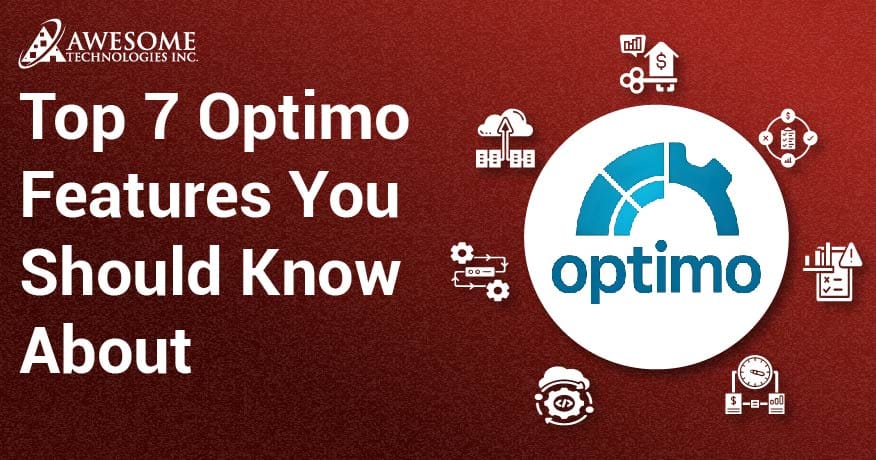
One such automated decision engine is called Optimo mortgage. It automates the mortgage lending process. These types of systems are becoming important pieces of technology as lenders begin using digital mortgage environments. Let’s discuss Optimo in detail in this blog.
What is Optimo Lending Platform? Understanding the Mortgage Decision Engine
Finova developed Optimo as a tool for lenders to automate and simplify the mortgage decision-making process. The Optimo mortgage platform perfectly automates loan processes. This relieves the lenders from having to do every step of the approval process by hand.
So, lenders will have a lesser chance of making mistakes and a quicker experience when receiving the approved loan.
With Optimo, lenders can assess the borrower’s capability to repay a loan, know if the loan is too risky, and make sure they apply all pricing rules fairly across all borrowers.
Optimo also improves and organizes loan production processes. By automating the decision-making process and creating a way to perform more loan applications, lenders can produce loan applications more quickly than before.
Additionally, lenders can improve their pricing strategies by standardizing their pricing rules across all loans. This will eventually result in a more efficient loan process.
Overall, Optimo lending automation system is an intelligent, simple-to-use mortgage decision tool to make more accurate and more reliable lending decisions. It also reduces the errors and saves time connected with lending decisions.
Benefits of Using Optimo Mortgage Software For Mortgage Lenders
- Rapid Loan Decisions: Automated credit checks and cost-saving calculations create more timely loan approvals.
- Precise Pricing: Rates can be evaluated on the basis of borrower risk.
- Consistency in Risk Assessment: Uses predictive models to reduce errors.
- Efficiency in Workflows: Combines decisions for better overall operation.
- Compliance to Regulations: Provides compliance to both federal and state lending laws.
- Scalable Operation/Volume: Higher volume of loans can be processed without extra resources.
- Improved Insight: Dashboards and reporting allow better decision making through real-time feedback.
How Optimo Fits Into the Modern Mortgage Technology Stack?
Today’s mortgage processing systems have several interconnected tools. A borrower starts by going to an application submission portal. After that, a LOS will manage all of the loan details.
Then, the decision engine assesses the loan (through an Optimo mortgage decision platform), checking credit data, applying risk models, and determining pricing. Finally, the decision engine will issue a loan offer to the borrower.
Optimo works with the other systems that lenders use on a daily basis without any problems.
For example, Optimo links:
- The lender’s CRM system to maintain tracking of borrowers
- The underwriting engine of the lender’s underwriter to confirm compliance with underwriting
- Connect credit agencies for risk analysis purposes
- Link pricing engines to ensure the accuracy of interest rates.
The combination of these operations allows Optimo to reduce mistakes, remove dual efforts in processing loans, and provide rapid loan approvals.
Optimo lending platform offers a perfect automated workflow. On the other hand, traditional systems offer a slow and non-automated process.
As a result of this smooth and detailed transaction processing capability, the lender can access all of the required information in one location.
How Mortgage Decision Engines Like Optimo Work?
Mortgage decision engines use a simple process to make fast loan decisions. The loan starts with the borrower completing an online application.
After the application is received, the system will validate all information before performing an affordability check. The affordability check includes checking income, expenses, and debt-to-income ratios.
After this, the Optimo mortgage software will generate a credit risk score using predictive modelling. The purpose is to assess whether the applicant can repay the loan amount or not.
After calculating a risk score for the applicant, the system will evaluate multiple pricing models. This decides the right loan price according to the borrower’s profile and the risk to the lender.
The last step in this process is to have the Optimo system create a fully automated loan decision in real time. This allows lenders to respond quickly to a borrower’s request.
Manual checks took a long time. Optimo automates them, saves time and reduces errors.
Borrowers receive much faster responses after lenders implement automated decision systems.
Lenders process more loan applications with greater efficiency than under the previous paper-based systems.
An increase of 2 to 3 times is possible using decision engines with the same level of compliance as before for loan processing volume.
Key Data Sources Used by Optimo for Lending Decisions
The majority of underwriting errors (more than 65%) come from either manual inputting of data or not having all the necessary information from Borrowers.
So, it is now important for lenders to use multi-source decision making processes.
Optimo obtains all different forms of data to arrive at precise lending decisions. One of these sources is Credit Bureau data, which gives them insight into a borrower’s credit history.
A second source is income and employment verification, which shows that a borrower can repay a loan.
Real estate value helps lenders confirm that the property used as collateral is worth the amount in the loan application.
Open banking data provides access to a borrower’s spending habits, as well as account balances. The lender may also use internal risk checks to base their own credit policies upon.
By combining the data from various sources, Optimo creates a complete picture of the borrower. This allows Optimo to analyze at least three sources of data at a time rather than depending upon a single point for decision making.
Real time pricing systems have shown over a 15% to 20% improvement in the rate that lenders can offer their customers.
The result of this is that lenders have a more accurate and consistent process for making lending decisions.
Top 7 Features of Optimo Lending That Mortgage Lenders Should Know About
Feature 1 – Intelligent Dynamic Mortgage Pricing Engine
What it is:
Optimo is an automated system that defines the price of loans according to borrower’s risk, market conditions, and lender needs. The system can dynamically change interest rates for borrowers in real time.
Benefits:
- More rapid time to market for mortgage products
- Lenders providing more competitive interest rates to borrowers
- Increased profitability for lenders with intelligent pricing models.
Many systems require lenders to update rates manually. They often take time to process and can be inaccurate due to human error. With an automated pricing engine, lenders using Optimo are at a great advantage.
Feature 2 – Automated Affordability Assessment Models
What it is:
Optimo automated underwriting engine will define if a borrower can repay a loan by checking their income, calculating expenses, verifying debt-to-income ratio, and testing their financial ability.
Benefits:
- Promoting responsible lending by promising borrowers’ ability to repay loans.
- Helping lenders remain compliant with government regulations.
- Establishing affordability evaluation for all borrowers.
Some systems only provide a limited form of affordability checks. Optimo automatically evaluates whether borrowers can afford a loan. This requires little or no manual effort by lenders and removes any chance of error.
Feature 3 – Credit Risk Scorecards and Predictive Decision Models
What it is:
The engine uses scoring models and prediction functions to automatically evaluate the credit risk of a borrower and their likely behavior relevant to future loans.
Benefits:
- Decrease the chances of the borrower failing to repay a loan.
- Speed up the loan underwriting process.
- Enable lenders to scale operations for lending.
Older lending systems depend on manually checking credit and applying fixed criteria to make a credit score.
Optimo is different because it uses predictions to generate an automated credit score.
Feature 4 – Real-Time Lending Analytics and Decision Insights
What it is:
Optimo has created dashboards that provide visibility into lending decisions, pipelines and how to track performance against risk. Lenders can quickly identify emerging trends as well as possible problems.
Benefits:
- Increase operational transparency
- Enhance clarity in the decision-making process
- Assistance in the implementation of data-driven strategies.
Full real-time insights will allow lenders to respond to market changes as quickly as possible.
Feature 5 – Flexible Workflow Automation and Rule Configuration
What it is:
Lenders can create their own rules for approvals, pricing policies, eligibility, and credit thresholds. The workflow will be automatically created per these rules.
Benefits:
- Speeding up loan processing
- Adapting to constant changes in lending strategy
- Minimizing manual review errors
With most decision-making tools, rule changes require the support of IT.
Lenders can easily configure rules in Optimo, allowing for faster, more adaptable workflows.
Feature 6 – API-Driven Integration Ecosystem
What it is:
Optimo mortgage decision software has a comprehensive API integration ecosystem that connects perfectly with:
- Loan Origination System (LOS)
- Credit Bureau Systems
- Open Banking Platforms
- Fintech Data Providers
- CRM Systems
Benefits:
- Smooth and perfect data exchange
- Reduction of double work
- Enables scalability in digital lending
Traditional systems have inconsistent integrations. So, it can take time to transfer data. With the API-based ecosystem of Optimo, you can get a quicker automated connection.
Feature 7 – Cloud-First Infrastructure and Enterprise Scalability
What it is:
Optimo has a cloud infrastructure with flexibility, security, availability, and scalability. Even at very high levels of loan volume, you can use our products without slowing down.
Benefits:
- Rapid implementation
- Able to handle very high application loads
- Minimize IT costs and maintenance
Most legacy systems use on-premise solutions that cost more than any other option. They are costly to maintain, and are inflexible. With Optimo’s cloud infrastructure, you can scale up quickly and reduce your overhead costs.
How Optimo Improves Mortgage Pricing Strategy?
By using risk-based pricing, Optimo allows lenders to set better mortgage rates.
Launching new products quickly allows lenders to respond quickly to changes in the market and stay competitive.
By eliminating the manual process of updating rates, Optimo also decreases the number of pricing errors.
Lenders can use historical data and predictive analytics to understand how borrowers behave.
The gap left by the majority of the legacy systems is that they require manual updates to rates and do not allow for real-time borrower segmentation.
Thus, Optimo being a pricing optimization tool allows lenders to be fast, accurate, and informed.
Optimo vs. Other Lending Platforms (Comparison)
| Capability | Traditional Systems | Optimo |
| Decision Speed | Slow | Near real-time |
| Pricing Updates | Manual | Automated |
| Risk Modelling | Limited | Advanced |
| Integrations | Fragmented | API-based |
KPIs Mortgage Lenders Can Improve Using Optimo/Comparison
| KPI | Traditional Lending Systems | With Optimo |
| Loan Decision Time | 3 – 10 days | Same day decisions |
| Pricing Updates | Days or weeks | Hours |
| Risk Evaluation | Manual | Automated |
| Product Launch Time | Weeks | Rather faster |
Real-World Use Case: Optimo in Mortgage Lending Operations
Scenario: The lender struggled with disjointed software for making borrowing decisions, determining loans manually and taking more time to process loan applications.
Solution: Optimo acts as a centralized decision engine for mortgage lending.
The program automated many functions including pricing, credit scoring, and checking whether borrowers can afford to pay back.
Results:
- Loan approvals occurred much more quickly (often, same-day).
- Credit risk modelling offered a more accurate picture of whether loans would be repaid.
- Mortgages were priced as per competitive and real-time market conditions.
Optimo simplified loan-application processing; reduced errors; and provided additional time for employees to work on building strong relationships with borrowers.
Common Challenges When Implementing Mortgage Decision Engines
Some obstacles faced by lenders in the lending/credit industry are as follows:
- Legacy system integration – Lenders may have very old equipment that can hinder easy integration with other systems.
- Data quality issues – Many lenders don’t have complete borrower or credit data which negatively impacts the data integrity.
- Rule configuration complexity – The number of variations of a product/loan that need to be configured properly within a lender’s system.
- Model calibration – Predictive models must be registered to provide a reliable measure of the calculated predicted value.
Optimo provides a single solution with flexibility and additional layers of integrations via cloud services, real-time data validation, and simple configuration of rules.
Throughout the lending process, it assists lenders to make right decisions.
Optimo Implementation Process for Mortgage Lenders
Implementing Optimo can be done in the following manner:
- Configure Your System: Configure new systems for importing borrower data and any LOS integration
- Configure Pricing Rules: Configure automated pricing factors and strategies for products
- Credit Scoring: Create risk scoring criteria, as well as predictive model to help you know risk
- System Integrations: API integrations with CRM, open banking & credit bureaus
- Testing and Launch: Validate decisions, train staff
This structured process allows lenders to quickly adopt Optimo with less disruption to their ongoing operations.
Lenders also benefit from having improved confidence.
Future of Mortgage Decision Engines (2026 Industry Trends)
By 2026, it is forecasted that 70% of Lenders will use automated decision making and/or AI driven underwriting.
Current trends in mortgage decision engines are:
- Automate underwriting through AI to predict risk based on the borrower
- Predictive lending analytics to predict market shifts and borrower needs.
- Automated Compliance Monitoring meeting regulations every time
- Real-time mortgage decision engines offer quick approvals & pricing
Lenders who utilize them will reduce risk, improve efficiencies and provide a faster service to their borrowers.
Who Should Use Optimo?
Ideal users include:
- Mortgage banks
- Fintech lenders
- Building societies
- Digital mortgage platforms
- Large enterprise lending institutions
Most organizations that require quicker approvals, superior risk management, and automation in pricing will achieve the greatest benefits from using Optimo.
It is beneficial to lenders that are looking for modern scalable mortgage technology.
How to Evaluate Mortgage Decision Engines Like Optimo?
Ensure that when evaluating a mortgage decision engine you check for:
- Ability to Automate Rate Pricing – Can the pricing change based on current market conditions?
- Flexibility in the Development/Flexibility of Risk Modelling Solutions – Is there the ability to use variable predictive scoring models across multiple sources of data?
- Integration – What types of integration are available? I.e. Does it provide integration to LOS, CRM and Credit Agencies?
- Analytics Capabilities – Does it provide real time access to reporting tools/dashboards/data mining/analysis?
- Scalability – Is the engine able to grow with the lender’s volume of loans?
Conclusion: Why Optimo is a Powerful Lending Decision Platform?
Optimo automated underwriting engine provides lenders with:
- Automated pricing strategies that automatically adjust with updated price
- The ability to quickly make lending decisions, generally on the same business day
- More comprehensive credit risk modeling to reduce loan defaults
- Scalability in the cloud for enterprise-wide growth
Optimo simplifies the lender’s workflow, customer experience, and overall operational efficiency. It works by removing the need for many manual and scattered systems.
If you also use predictive analytics, configurable rules, and an API-based integration framework, then you can smartly meet present and future mortgage technology needs.
To modernize your mortgage decision, decrease risk and improve speed and efficiency, avail Optimo lending today! Let’s connect.
FAQs
1. Can Optimo handle multiple loan products and rate types at once?
Yes. Optimo provides support for all types of mortgage products. It includes fixed and variable and hybrid loans that lenders can handle together with automated pricing and decision rules.
2. How does Optimo maintain compliance across federal and state regulations?
Optimo performs automatic compliance checks that operate in real time. It updates rules for TILA, RESPA, TRID, HMDA, and state-specific regulations.
3. Can lenders customize risk models for unique borrower profiles?
Yes. Lenders have full control over the design of risk models in their organization so they can customize with ease.