
Is your mortgage business ready to meet the expectations of today’s digital borrower? The mortgage industry has relied on traditional paperwork and face-to-face interaction, but is now experiencing rapid technology advancement. As competition brings pressure from above, and clients want speed and personalized digital experiences, the urgency for all lenders and brokers, regardless of size, requires purpose-built mortgage CRM software.
Best mortgage CRM software are designed for the complicated demands of loan origination, compliance and client lifecycle management, unlike generic CRMs. Mortgage CRMs help you manage leads to build relationships, but more importantly, they automate repetitive tasks, collect documents and lead you through the ever-changing regulatory landscape. In a business where seconds matter, and every lead matters, a CRM system can dramatically improve conversion rates, productivity, and the overall borrower experience!
This blog is intended to be a comprehensive guide for anyone thinking about using a mortgage CRM solution. We will be breaking down the mortgage CRM software cost phase by phase, will discuss must-have features, and will also go through major considerations that will affect both functionality and long-term value. This guide is for mortgage start-ups building their initial tech stack, brokerage firms looking to improve workflows, fintech developers building scalable platforms, and investors considering custom CRM development! Let’s dive in!
What is Mortgage CRM Software?
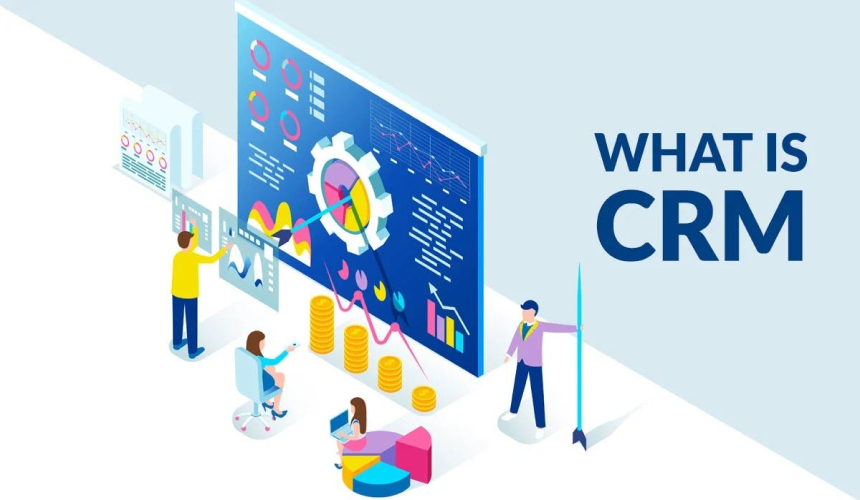
Mortgage CRM software is a customer relationship management system focused on serving the mortgage lending industry specifically. It is essentially a one-stop technology solution for loan officers, mortgage brokers, and lenders that improves client relationships, automated workflows, and helps stay compliant.
Top mortgage CRM software is designed specifically to meet the needs of the loan origination process. They are much different than general-purpose CRMs such as Salesforce or Hubspot. For example, mortgage CRMs come with mortgage-focused features like pre-qualification tracking, automated status/ milestone updates to stakeholders, integrated electronic signatures, and document management capabilities. CRM software for mortgage brokers enables more straightforward and transparent workflows for lengthy and complex processes.
Key Benefits of CRM Mortgage Software:
- Reducing Repetitive Work: Automates and follow-up emails, data entry, and appointments.
- Lead Management: Monitors potential clients from the first touchpoint through loan closure, so nothing falls through the cracks.
- Compliance: Keeps records accurate while helping with compliance to lending and privacy laws such as RESPA, TILA, and GDPR.
- Client Communication: Allows an organization to be proactive and personalized in communicating via email, SMS, or phone and improving the borrower’s experience.
Common Tasks Handled by Loan Mortgage CRM Software:
- Collecting and securely storing documentation required from borrowers.
- Sending automated follow-up messages related to their loan at appropriate times.
- Notifying clients regarding changes in mortgage rates or status of their application.
- Coordinating communication with referral sources and real estate agents.
In summary, top CRM software for mortgage helps improve efficiency, improve client relationships, and allow lending teams to be organized and compliant throughout the life of the loan!
Global CRM Statistics (2030 Forecast)
The global CRM software market forecasts to exceed $140 billion by 2030 and compound annual growth rates (CAGRs) of 12–14%. There will be significant growth proposed from industry-specific CRMs particularly in regulated sectors like finance. AI is very much there in new solutions, and demand for tailored customer experiences expands. Mortgage CRMs will likely see widespread adoption in North America and Europe as well as emerging markets as lending becomes increasingly digital!
Factors to Consider When Building or Implementing a CRM Mortgage
If you are planning to adopt or develop a loan origination CRM, it is important to assess the various factors that will impact the functionality, costs, scalability, and overall success of the system in the long-term. Indeed, these factors can help to formalize the rationale for making a knowledgeable investment.
1. Features and Functionalities
The heart of any mortgage software solution lies in managing the business efficiently. Know what features you want prior to development and set your goals based on your business size and client volume. Your basic functionalities will likely include things like lead management, contact management, process automation, reporting dashboards, and secure document storage. Your mortgage CRM software should manage your full loan pipeline from the lead to the post-closing follow up. Prioritize your features based on business necessities rather than trying to build everything at once. Doing this allows for reduced development costs and increased simplicity.
2. Integration Needs
The best mortgage CRM software will not do you much good if there is no ability to integrate with the systems that you are already using. Mortgage professionals are dependent on systems such as Loan Origination Systems (LOS), credit check services, e-signature services like DocuSign, etc. Meanwhile, important integrations for mortgage professionals also extend to commonly used systems like email/calendar, Point of Sale platforms, and mass marketing applications. All is done to ensure consistency and efficiency to accomplish goals. Proper API integration removes duplicate data entry, reduces data loss and user’s error, and even allows different systems for easy communication and enhanced productivity.
3. Geographic Location for CRM Developers
The location of your development team has a big impact on your project’s overall budget. Developers in the U.S. and Canada typically have mortgage software cost between $100 and $200 per hour; teams in Eastern Europe will charge around $40 to $80 per hour. South Asian countries will cost $20 to $50 per hour. Offsetting or nearshoring development can reduce costs, however, you must also balance effective communication, documentation, and project management, which can lead to mismatched expectations.
4. Platform Compatibility
The platform that your CRM software for mortgage brokers will run on impacts your overall access and usability. Most CRMs today are web-based and can be accessed via the cloud on any web browser. Mobile access is becoming more critical, especially for brokers and agents operating remotely. There are desktop applications, but they are less common and tend not to be very scalable. Mobile-friendly and responsive platforms should be placed as the priority overall.
5. Regulatory Compliance
The mortgage industry is heavily regulated with laws in place that dictate how your organization captures, stores, and shares data. Depending on your region and audience, your CRM is obligated to meet various regulation standards, including GDPR (general data protection regulation for European users), CCPA (California residents), as well as U.S. specific regulations, such as RESPA and TILA. To meet compliance, another requirement for your CRM for mortgage professionals is to have tools for permission-based access, encrypted storage, audit logs, consent logs, etc. Violating compliance standards can lead to heavy fines and irreparable damage to your brand.
6. Technology Stack
The technology stack chosen by your CRM mortgage software will dictate the speed of development, scalability, and future maintenance. Most organizations will use a combination of technologies when choosing a technology stack. A sample tech stack could be React/Angular for the client-side front-end, Node.js/Python/.NET for the back-end server-side development, and PostgreSQL or MongoDB for the database component. Finally, to be sure to be aligned with the cloud component, organizations typically use AWS or Azure. Choose the technology stack that is scalable, secure, and that developers like working with, so that you can ensure greater success in the long run and avoid unforgiving technical debt.
7. Maintenance and Updates
It is important to maintain your top mortgage CRM software. Maintenance must occur continuously after your CRM is launched to ensure it remains secure, usable, and meets the users’ needs. Maintenance costs include: bug updates, enhancements/new features, compliance/updates, and performance enhancements. The maintenance plan should include an ongoing collection of feedback from the users to help guide topics for updates, to engage users and maintain system relevance. A proactive plan to maintain software will ensure your investment is protected and expands the life of your CRM platform.
Essential Features of Mortgage CRM Software
Below are the essential features that will keep you business productive, compliant, and bring happy clients.
1. Custom Branding
Custom branding allows you to white-label your CRM software for mortgage brokers and incorporate your company’s brand. This is very important when communicating with borrowers and keeping consistent branding experience for consumers.
2. Mortgage Lead Management System
The mortgage lead management system can track inbound leads, outbound leads, have scoring metrics, and route leads to loan officers.
3. Analytics and Reporting
- Provides insight into:
- Conversion rates
- Loan pipeline status
- Team performance
- Marketing ROI
Custom dashboards improve the decision-making process through data.
4. Contact Management
Centralizes all contact data, notes, communications, and loan history to create 360-degree client profiles to enhance personalization.
5. Workflow Automation
Reduces repetitive tasks such as sending emails to follow up, loan status updates, and appointment reminders. Loan mortgage CRM software improves efficiency and limits manual errors.
6. Pipeline Management
Visual representations of where a lead or loan is in the pipeline (application, underwriting, funding, etc.)
7. Communication Tools
Automated emails/SMS, call logs, drip campaigns, chatbots (optional) in a CRM mortgage software helps maintain consistent and timely engagement with borrowers.
8. Document Management
Secures and tracks important documents such as:
-
Pre-approval letters
-
W2s and tax returns
-
Credit reports
-
Disclosures
Has options for document sharing and e-signature workflows
9. Mobile Access
Loan officers can update the status of leads, schedule next week’s action Items, and connect with clients on his/her mobile phone while away from the office.
10. Security and Compliance
As a must-have:
-
User/role-based permissions
-
Audit logs
-
Encryption of data
-
Safe backups
Protects sensitive borrowers information and complies with laws and regulations
Mortgage CRM Software Development Process
1. Market Research and Planning
Begin by determining the goals for your top CRM software for mortgage; developing user personas; and mapping competitor offerings. Process current CRM abilities; understand user pain points; and identify unique value propositions.
2. UI/UX
Create wireframes and prototypes that showcase a simple and effective approach. It is because the mortgage professionals are managing many clients at once so UI must be simple and fast.
3. Development and Testing
Development will be done in agile sprints that will address:
-
Back end business logic (lead scoring)
-
Front end user interface components (dashboards, and forms)
-
API integrations (credit check, LOS)
-
Unit testing and integration testing will run concurrently.
4. Deployment and Support
Deployment on a scalable cloud computing platform (AWS, Azure). Initial training for users and help desk support should be initiated.
5. Post-Deployment Support
To ensure proper maintenance and management of your mortgage software servicing, implement updates based on user feedback and changes in employment law. Ongoing bug fixes and new feature implementation will help with future retention, security, and support.
Mortgage CRM Software Development Cost by Development Stage
1. Discovery & Planning – $5,000 – $15,000
This phase is critical for developing a plan of action that will outline what you can realistically achieve and what is achievable, in addition to aligning your business goals. This phase also builds the foundation of the phase.
Includes:
- Research on market and competitors
- Feature roadmap
- User journey
- Technical specifications
- Wiring up wireframes
Carrying out a discovery phase properly will help minimize scope creep plus burn rates, and the amount of time spent on development.
2. UI/UX Design – $10,000 – $25,000
The design phase in the best mortgage CRM software is focused on developing an interface that will be easy for the end-user to use and attractive to the surrounding mortgage professional’s workflow.
Includes:
- User personas and user flow maps
- Wireframes for all key screens
- A clickable functional prototype in order to talk about during feedback/testing
- Branding and UI components
Spending a little bit more time and money on good design usually results in greater adoption rates, and has the potential to reduce a new product launch training costs.
3. MVP Development – $30,000 to $80,000
The Minimum Viable Product (MVP) is your first working version of the CRM mortgage software. It contains core items to test your core functionality and allow your users to provide feedback – in most cases, both useful features in the MVP. Contains: Lead and contact management Workflow automation Document upload/storage Mobile responsive frontend Basic integrations with systems (i.e. email, calendar, etc.) The MVP is a solid option for startups or teams looking to make sure they validate a concept before building out.
4. Full Features Development – $80,000 to $150,000
After the MVP has gone through validation, this phase will build on the mortgage software solutions that provide features to support advanced capabilities and ultimately are enterprise-ready. Adds Custom dashboards and analytics Advanced workflow automation (e.g. loan milestone trigger) Integrations with LOS, POS, and credit reporting Enterprise-grade security and compliance modules This full feature version can support scaling/growth initiatives, multi-team use cases, and compliance/regulatory depth.
5. Testing & QA – $5,000 to $15,000
Quality assurance (QA) will ensure your CRM mortgage is reliable, user-friendly and secure prior to launch.
Will ensure:
- Performance testing & load testing
- Cross-platform testing
- Security vulnerability assessments
- Usability testing & bug fixes
If you do not perform QA, you risk critical failures after launch. For this reason, QA is a good and viable investment.
6. Launch & Deployment – $2,000 to $10,000
In this last phase, the development team will make the CRM software for mortgage brokers available and put it into operation.
Includes:
- Setting up cloud hosting (e.g. AWS, Azure)
- Domain and SSL configuration
- Deploying the server and performing a final debug
- Initial go-live support and monitoring
7. Ongoing Maintenance – $2,000 to $10,000/month
Once a CRM is launched, having proper ongoing maintenance is critical to ensuring the system is secure, updated and continuing to meet the business objectives
Includes:
- Regular scheduled bug fixes and patches
- Development of new features based on user feedback
- Ensuring compliance with regulations (e.g. GDPR, CCPA)
- Infrastructure monitoring and performance tuning
Total Estimated Cost:
The mortgage CRM software cost is $30,000 for a low complexity basic MVP and over $300,000 for a full-featured enterprise-grade platform, plus ongoing monthly support. Understanding expected costs in each of these stages allows you to plan and budget to keep your development process on track and realize a greater ROI in the development of your CRM.
Take Advantage of What Is Around and Build Your Own CRM Mortgage Software!
If you don’t know where to start, you might want to consider hosting a discovery workshop with a development company or A CRM consultant. Your ongoing custom mortgage development plan or roadmap will help you plan ahead and if you partner with Awesome Technologies Inc., your CRM can be a robust opportunity to streamline your overall operations, process more loans, and enhance client satisfaction! Let’s Connect!
Build vs. Buy: When to Choose Which?
Choosing between building a CRM software for small mortgage team or purchasing a pre-built option is based on your business objectives, goals, resources, and timeframe. Building your own solution has its own positives and understanding them will help you make a more informed, better value and strategic decision.
a. Advantages of Building a Custom CRM
When you build your own loan mortgage CRM software, you have full control of every aspect in terms of features and how it fits into your operational needs.
- Custom Workflows: You can build workflows that are specific to your team workflow, as it allows you to create workflows from loan origination to closing, without compromising how you work.
- Scalability: Custom systems are designed to be customized to the growth of your business. Scaling with more users, more integrations, and more and more complex tasks your way.
- Data Ownership: You are in control of where your customer data lives, how it is stored, and how it is protected. It is very important for compliance and security reasons.
- Branding: You can design the entire interface to showcase your brand for your borrowers, providing a uniform experience to create trust.
Custom development is suitable for established lenders or fintech companies with very specific requirements or for lenders/companies who wish to scale aggressively.
b. Advantages of Buying Pre-built Solutions
While purchasing a pre-built CRM mortgage software may sacrifice customization, speed and simplicity are the most significant reasons for newer or smaller mortgage companies to consider pre-built CRMs.
- Speed to Portfolio: You can deploy a pre-built CRM mortgage in days or weeks, not months, and that will allow you to onboard clients faster.
- Lower Upfront Cost to Market: Most pre-built CRM solutions charge monthly fees through a user subscription (often SaaS model) ranging between $50 and $500 per user depending on the features provided.
- Built-in Compliance: CRMs regularly update their services. That means they constantly examine and make their software compliant with changing regulations, which lowers your continuous legal risks and maintenance effort.
Purchasing the CRM mortgage software is a wise choice for startups, smaller teams and brokers that require quickness and functionality without further delay in full-scale development.
c. Popular Mortgage CRM Platforms
- Jungo: Being built on Salesforce enables Jungo to tap into powerful automations and real estate ecosystems.
- BNTouch: This is a full-featured (in BNTouch’s case Turnkey) CRM that includes marketing automation, client portals and affords tracking of your referrals.
- Surefire by Top of Mind: This software is best known for solid borrower engagement tools as well as content marketing features.
- White Label CRMs: These CRMs allow for customization of platforms for broker networks or for teams wanting to order a branded option while avoiding full build-out.
- ATI Mortgage CRM: This customizable mortgage CRM simplifies the lending process with a configuration of workflows, fee templates, checklist, and communication tools (email/SMS). It also includes rule based automation for lead routing, task notifications, onboarding, user history etc. all to ensure error free processing of loans and smooth processing overall!
In the end, it comes down to budget, time (how quickly it must be put into play) and degree of uniqueness in your situation.
To Conclude
Building a mortgage CRM software typically costs between $30,000 and over $300,000, depending on what you want it to do and how custom it is. Just as important as your investment, is going to be having your technology aligned with your long-term business goals.
Whether you are a startup that needs speed, or an established company investing in technology infrastructure, you’ll want to always prioritize features based on what your operational needs and borrowers expectations are. And as a related side note, hopefully you have planned for ongoing maintenance/upgrading, security updates, and for compliance needs.
If you are looking to build a robust mortgage CRM that’s tailored to your business needs, Awesome Technologies Inc provides mortgage CRM development services so you can build a powerful, custom application that streamlines your entire loan process, improves lead management, and ensures your company stays compliant with regulations. Reach out today and let us help you in mortgage software development that will scale and grow with your business!
FAQs
1. What is Mortgage CRM software?
Mortgage CRM (Customer Relationship Management) software is a specialized system for mortgage professionals to manage customer interactions, track leads, automate follow-ups, and guide smooth communication during a mortgage loan’s life cycle. They help streamline client management, increase productivity, and improve overall customer engagement.
2. What are the main features of Mortgage CRM software?
Typical features include lead capture and tracking, automated email and SMS communication, pipeline management, loan milestone notifications, document management, integration with LOS (Loan Origination Systems), and reporting tools. It allows lenders and brokers to keep organized, work more efficiently, and close more loans.
3. What is the average cost for small mortgage teams?
Mortgage CRM software for small mortgage teams typically costs between $50 to $200 per user per month, depending on the platform, features, and level of customization; some providers offer tiered pricing or group discounts for multiple users.
4. Why create white-label mortgage CRM software?
The single biggest advantage of creating a white-label mortgage CRM is giving your customers a branded experience. When a business can put their own brand onto an existing solution it allows them to control the features, manage data, and create an additional revenue stream. This option introduces a competitive stance to their offering while maintaining the brand identity of the licensing mortgage company (or tech provider).
5. How should I go about creating a mortgage CRM software?
The first step in creating a mortgage CRM is to understand how users will interact with the product. Next, you should outline core features e.g., lead management, communication capabilities, integrations etc. Then the tech stack should be well thought out. Typically, building software involves designing the UI/UX and then developing the software with the backend structure. Integrating third-party products such as a LOS or a secure credit check will also be involved in the process. Finally a rigorous testing plan should be established as you prepare for launch.
6. How much does a mortgage CRM software cost?
To get a better understanding of the common costs clients can expect to pay for a basic CRM solution, it can range from $10,000 up to $20,000. Most mortgage CRM software products will be in the $30,000-$150,000 range in development costs regardless of whether it is a mobile or web application. Some of the other costs that will fluctuate are hosting, maintenance, support and further software updates.