
Have you ever thought about buying a home and asked yourself how people could afford such a big purchase? A mortgage is the answer. But what is mortgage? It is the key to home ownership for millions of people. So, what is a mortgage, and how does it work? When broken down to the basics, a mortgage is a loan that you take out to buy a place to live.
Instead of paying for the house in one lump sum, you’ll borrow the needed funds from a lender and pay it back in smaller amounts, generally in monthly payments with a calculated amount of interest. In the case of a home purchase, the home itself will be used as collateral if you can’t make your payments.
There are many different types of real estate mortgages. From fixed-rate to adjustable-rate, government-backed to jumbo loans, each different kind of mortgage is designed to meet a different financial situation, and ultimately a different homebuyer’s needs. Choosing the correct mortgage type can save you thousands of dollars or cost you thousands depending on your situation and plan.
In this blog, we’ll break down how mortgages work, explore the most common types, and walk through real-life examples so you can understand the process and make informed decisions. Whether you’re a first-time buyer or just mortgage-curious, you’re in the right place as you get the hands-on information on mortgage!
What is a Mortgage?
A mortgage is a type of loan that is used to buy real estate, usually a home. When you obtain a mortgage loan, you borrow cash from a lender (such as a bank or credit union) to purchase property. In return, you agree to pay back that amount of money (plus interest) over a specified period of time.
Here are the parts of a mortgage:
- Principal: This is the amount of money you borrow. For example – If you purchase a $300,000 home and you put down $60,000, you will have borrowed $240,000.
- Interest: The interest is the cost of borrowing the money and is usually expressed in a percentage (called the interest rate). Interest is added to your monthly payment and is highest in the first years of your mortgage.
- Collateral: The home itself acts as collateral. This means that if you do not pay your mortgage back, the lender has the legal right to take the home back (foreclosure).
- Term: This is how long you have to pay back the loan. Typically it is for 15, 20, or 30 year periods.
A real estate mortgage is a step up from renting, as it means making monthly payments to live in a home but, unlike renting, and as exemplified by cash-buying, you will own the home. A mortgage is beneficial for those wishing to become homeowners because it enables a person to buy a house without having to come up with all the money at once, and it is a very popular way to buy a home.
KEY TAKEAWAYS
- What is a mortgage loan? A mortgage is a long-term loan for buying property in which the loan is secured by the property itself that is being used as collateral.
- Monthly payments are the principal (loan amount) and interest amount stated.
- There are many types of mortgages including fixed-rate mortgages, adjustable-rate mortgages (ARM), interest-only mortgages, reverse mortgages and loans guaranteed by the government.
- When choosing the right mortgage consider rates, terms, fees and your finances.
Mortgage Examples
Scenario A: First-Time Buyer Using FHA Loan
Emma is a 28-year-old teacher who found herself in the situation of buying her first home. But she was not sure, home loan vs. mortgage. Emma had a decent credit score of about 650 and not much savings. In order to get a mortgage under conventional loan terms she would have to save a large down payment and wait even longer than presumed. So she decided to apply for an FHA loan that allowed only 3.5% as a starting down payment. She had payment amounts below her comfort level, found the loan flexible in terms of credit, and she would have to pay for mortgage insurance, it was still going to help her become a homeowner sooner than she had anticipated.
Scenario B: Investor Using ARM for Short-Term Hold
Mike is a real estate investor buying a fixer-upper he is going to renovate and sell in the next three years. He has financed the purchase using a 5/1 Adjustable-Rate Mortgage (ARM), with an introductory low rate. He will be selling the property before the interest rate adjusts, so he accepts lower payments as he renovates the house and sells it, maximizing the return on his investment. Thanks to mortgage lending!
Scenario C: Retiree Taking Out a Reverse Mortgage
Linda, a 70-year-old retiree, has no mortgage on her home but is in need of extra income to pay for medical bills. Instead, she took out a reverse mortgage, with the lender paying her monthly payments from the amount of the loan. She is not required to pay back the loan until she moves out or passes away. It enables her to access her home equity, without having to sell her home or downsize, and provides her with some financial comfort in retirement.
How Does A Mortgage Work?
A mortgage allows you to buy a home without having to pay for it all at once. You borrow money from a lender, usually a bank or mortgage company and agree to pay it back over time. This works because:
- Collateral: The home acts as collateral for the loan. If you stop paying on your loan, the lender can foreclose and take ownership of the home as part of their efforts to recover losses.
- Amortization: Monthly mortgage payments are two parts: interest and principal. Interest is the cost of borrowing money, and the principal is the loan balance you are paying down over time. When you first start making mortgage payments, a larger portion goes toward interest and a smaller portion goes toward paying down the principal loan.
- Lien: The lender places a lien on your home. You legally own your home, but the lender has rights to the property until the loan balance is paid in full.
The Mortgage Process – How Mortgage Loan Works?
Buying a home and getting a mortgage can seem like an overwhelming process, but this step-by-step guide can help:
- Pre-Qualification vs. Pre-Approval
When you obtain a pre-qualification, it is an informal estimate of how much you may be able to borrow based on self-reported financial information. Pre-qualification is beneficial as it provides you with a basic understanding of your budget range. Pre-approval is more formal. With a pre-approval, you would submit several pieces of financial documentation, such as pay stubs, bank statements, and credit report to the lender, and then the lender reviews your information and gives you a conditional commitment for a specific loan amount. Pre-approval is more credible with sellers and gives you a portrait as a serious buyer and one with verified financial standing.
- House Hunting and Making an Offer
Now that you have a pre-approval letter for home mortgage lending, you can begin looking for a house! The next steps include working with a real estate agent to tour properties, compare prices, and find the home that meets your needs and budget. When you find the right property, you will make an offer, typically with the help of your agent. The offer may also include contingencies (for example, for a home inspection or financing approval), and an offer is usually followed by negotiation. Once the offer is accepted by the seller, the home is under contract, and you will undergo the next process in the mortgage process.
- Mortgage Application
After your offer is accepted, the next step is to complete a full mortgage application with your lender. At this point, you will collect all personal information regarding your income, assets, employment, and debts to submit to your lender. Once the lender receives this info, they will verify the info you’ve provided to ensure you still qualify for the proposed loan amount. While this is happening, you will also choose a loan type (fixed-rate, adjustable-rate, etc.) and lock in an interest rate if you’d like. During the process, your lender will likely request additional documentation as well.
- Property Appraisal
To verify the home is worth the amount of the loan, the lender will order an appraisal. An independent appraiser will visit the property and evaluate its market value, taking into consideration the property’s condition, location, and comparable homes that have sold in the same neighborhood. As long as the appraisal comes back at or above the purchase price, the loan process will continue. If the appraisal is lower than the purchase price, your options will likely be to renegotiate the price or to come up with the difference in cash.
- Underwriting Process
Underwriting is the lender’s process of reviewing all of your financial documents and the appraisal report. The underwriter will determine whether your debt will be repaid by reviewing your income, debts, credit history, and value in the property. Once the underwriter is satisfied that all reviewable items are satisfied, they will issue a “Clear to Close”. If there are issues, and there could be if there were gaps in your documentation or other items with discrepancies, they may ask for more information or deny the loan altogether.
- Closing Process (Documents, Fees, Final Steps)
Just before the close, you will receive a Closing Disclosure. It lays out what your final loan terms will be: what your monthly payment will be, and all of your closing costs. On closing day, you will sign a bunch of paperwork, including the mortgage documents and title documents. You will also pay your closing costs, which may include lender fees, title insurance, and escrow deposits. When everything is signed and the funds transmitted, you get the keys and become a homeowner.
What Are The Types Of Mortgages?
Most home buyers or homeowners will need a mortgage to get the home they want. Mortgage in USA has many variations based on your needs. Here is a summary of types of mortgage loans:
1. Fixed-Rate Mortgages
What it means: The basic definition is that the interest rate remains static while you have the loan.
- Why it is a good option: Consistent payments.
- Example: You might have a 30-year loan at 5% interest. Your payment would be the same every month no matter what happens in the market with interest rates.
- Who it is for: Good for home buyers who intend to stay in the same home for a long time, and good for easy budgeting with consistent payments.
- CAUTION: It is common for fixed-rate mortgages to have a higher rate than adjustable-rate mortgages. So, if you plan to sell or refinance your mortgage in a few years prior to selling your property, you may miss the potential for lower rates in the future.
2. Adjustable-Rate Mortgage (ARM)
- What that means: The interest rate is fixed for a predetermined period of time (for example, 5 years) and then “adjusts” annually based on a specified indexed rate, along with a margin.
- TIP: This can make sense if you are planning to move or refinance prior to the interest rate adjustments or the market seems set for rates to go lower.
- Example: A 5/1 ARM could be at 3.5% for the first five years and then adjust each year following the fifth year.
3. Interest-Only Loans
- What that means: You only pay interest during the introductory period (generally 5–10 years), then they will begin including both the principal and interest thereafter.
- Tip: Useful if you expect a large pay increase or you plan to sell before payments on the principal part start.
- Downside: No equity is being built during the interest-only period. You should be prepared that your payment amount could jump when interest only term ends, this could be risky!
4. Reverse Mortgages
Reverse Mortgages are aimed at people who are 62 and older. While you usually, as the homeowner, make the payments to the lender, the lender pays you a lump sum or monthly income instead.
- Tip: You do not have to pay tax on the funds you get (an important point for extra income in retirement).
- WARNING: You will eventually have to pay back the loan (plus interest) when you move out or die. It does reduce your equity, and that may reduce your inheritance.
Average Mortgage Rates (So Far for 2025)
NOTE: These rates of mortgage in finance are national averages based on mid-2025. The rates could still fluctuate depending on the economy, inflation, and actions by the Federal Reserve.
| Mortgage Type | Average Interest Rate |
| 30 Year Fixed | 4.75% |
| 15 Year Fixed | 4.00% |
| 5/1 ARM | 4.25% (Initial rate) |
These are national averages. Your rate, as stated above, could vary based on your credit score, down payment, loan amount, and lender.
How to Compare US Mortgages?
When you talk about mortgage offers, think about the following:
- Annual Percentage Rate (APR): This is your actual cost, where the interest and a few fees are included in one figure.
- Monthly Payment: You may have a budget that restricts what amount is affordable.
- Closing Costs: These are costs incurred for appraisal, credit checks, title checks, etc.
- Loan Terms: Longer loan terms entail lower monthly payments but could mean more interest paid.
- Type of Interest: Fixed, adjustable, interest only has tradeoffs.
- Down payment requirement: More down payment = less borrowed, lower rate (and avoid mortgage insurance)
- Prepayment penalties & flexibility: Some loans will punish you for paying off your loan early, so if you are planning to refinance or sell soon, be careful here.
If You Have a Mortgage, You Still Own Your Home
IMPORTANT: You are the legal owner of the house as soon as you close and with ownership comes the liability of maintenance, taxes, and insurance. The lender has a lien only; they could only foreclose if you miss payments.
If you miss a payment, the bank can foreclose and take the property. Otherwise, it’s yours; you sign the deed and own the house.
Why Do People Need Mortgages?
- Affordability: Very few people have tens or hundreds of thousands of dollars to pay cash for a home.
- Leverage: Mortgages allow you to buy an asset of high value, and only pay a small amount down.
- Interest rates are at an all-time low: In the past interest rates have fluctuated in the single digits, making borrowing cheaper than saving.
- Equity: Every time you pay down your principal (or if the housing market increases), you are increasing your investment.
- Tax benefits (not in all countries): In some markets, mortgage interest can be deductible, resulting in an overall lower tax bill (speak with a tax advisor).
Can Anybody Get a Mortgage in Finance?
Generally, yes but with conditions:
- Credit score: Generally, a credit score of 620 or higher is required for conventional loans. Government programs can go lower.
- Income verification & debt ratio: Lenders want to see that you have a constant source of income and can afford the monthly payments (at least less than 43% of your gross income).
- Down payment: Credit score may vary – some loans require 3-20%, whereas some FHA loans are only 3.5%.
- Property appraisal: To determine if the home is worth the amount of the loan.
- Other barriers: Employment history, closing cost savings, and documents.
You may find it harder if you are self‑employed, part-time, or a gig worker, but a strong record of your income and greater down payments make it much more feasible to qualify.
What Does Fixed vs. Variable Mean on a Mortgage?
Fixed: Interest rate is constant for the life of loan- predictable and stable
Variable (another term for ARM): Interest may be modified at specified times after a fixed period (say 5, 7, or 10 years) depending on how other measures–essentially market conditions–are trending.
Fixed is consistent. ARMs may offer better initial rates than fixed lending rates now but have unknown future outcomes.
How Many Mortgages Can I Have on My Home?
In theory, you could have many mortgages and types of mortgages on one single asset. You might know of many different kinds of mortgages, for example:
- A first mortgage, which is the primary loan you obtained to purchase your home.
- A second mortgage (also known as a HELOC) is a home equity loan or line of credit obtained later via the increased equity in your property.
Each must be repaid on the scheduled payment terms. In the case of foreclosure, the first mortgage will be repaid first and the second afterward. Most lenders allow only one type of first mortgage and one type of HELOC but limits put in place by regulators make each lender different. If or when you refinance, your old loan would be paid off and the new loan would replace it.
Tips for First-Time Mortgage Seekers
Purchasing your first home is an exciting process; however, it can also be quite overwhelming. These strategies will help you create a solid foundation for your mortgage journey:
- Enhance your credit before you apply
Your credit score will play a big part in the interest rate you qualify for. Higher credit scores can potentially save you thousands over the life of your loan. If possible, pay off credit cards, avoid being late for your payments, and correct mistakes on your credit report before you apply.
- Pay more than minimum down payment
There are loans that require as little as 3% down. But as a homeowner, putting 10-20% down not only decreases your monthly payment, it can also eliminate private mortgage insurance (PMI) and strengthen your application in a more competitive market.
- Avoid ‘stretching’ your budget
Just because you qualify for an amount does not mean you have to spend the maximum. Always factor in future expenses, lifestyle necessities, and give yourself some leeway to cover unexpected costs. You’ll enjoy your home more if you aren’t incurring financial distress.
- Get quotes from many lenders
Interest rates, fees and terms vary among banks and lenders, and as a borrower, you can use this to your advantage. Take the time to shop around, obtain multiple rate quotes, and make sure to negotiate—small differences in rates may have a major impact depending on the loan size.
- Understand total costs beyond monthly payments
It’s not only about your mortgage payment. You will also owe property taxes, homeowners insurance, maintenance, and possibly PMI. Know what the total cost of homeownership entails before signing on the dotted line.
Common Mortgage Mistakes to Avoid
Steering clear of these mistakes will help you financially and save you future headaches. This is how:
- Ignoring closing costs: These can range from 2% to 5% of the price of the home; don’t be surprised by them.
- Not locking in your interest rate: Rates can change in a blink of an eye. If you don’t lock, your rate can go up before you close.
- Choosing the wrong loan term: A 30-year loan will have a lower payment but you will pay more interest over that time. A 15-year loan will save you interest but your monthly payments will be higher – know what is best for you.
- Not reading the fine print: If you do not read the conditions of the loan or hidden fees, you might be in for a surprise.
- Underestimating future financial risks: A job change, medical expenses, and changes in local or national economies may all affect your ability to pay. Always plan with a safety net in mind!
The Bottom Line
A mortgage enables you to achieve the dream of homeownership through borrowing, repayment, and collateralizing a house. Mortgages come in many forms including fixed, adjustable, interest-only, and reverse mortgages. Each mortgage type comes with advantages and disadvantages. With proper research and preparation, a mortgage can help you achieve homeownership in an affordable and financially smart way.
Awesome Technologies Inc is focused on building customized mortgage software solutions to optimize lenders and quickly facilitate their customer experience while complying with regulations. Whether you’re an emerging lender or an established lender, we provide end-to-end mortgage platforms designed to scale with your business.
Prepare to revolutionize your mortgage operations? Contact Awesome Technologies Inc. today to build your smart, secure, and future-proof mortgage software and get ahead of the competition.
Final Tips for Your Mortgage Journey
- Improve your credit: Pay down balances and don’t open new credit lines before applying.
- Save for a strong down payment: Even a few extra percentage points translates to lower rates and smaller monthly payments.
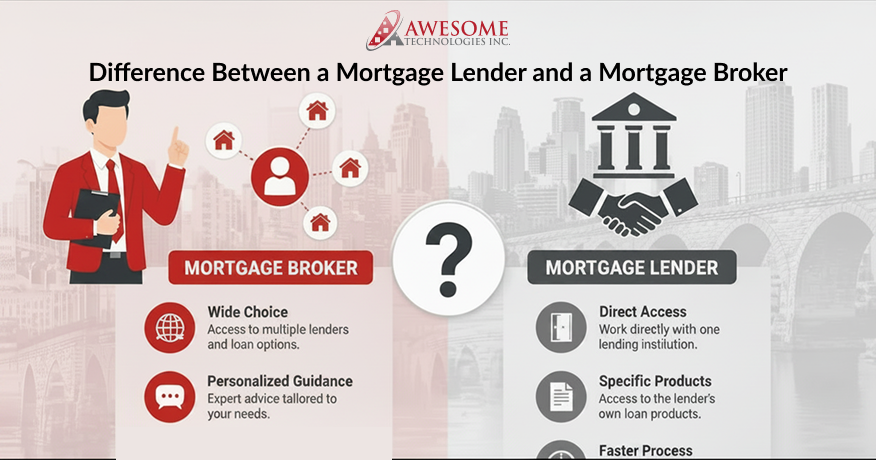
- Shop around: Get quotes from several lenders such as banks, credit unions and mortgage brokers.
- Understand all costs: Don’t forget or overlook prepayment penalty fees, mortgage insurance costs, and appraisal expenses.
- Be future oriented: Consider how long you plan to stay in the home, career plans, and market trends.
FAQs
1. What’s the difference between pre-qualification and pre-approval?
Although they sound alike, pre-qualification and pre-approval are different and serve different purposes in the homebuying process:
Pre-qualification provides a rough estimate of what you might borrow. It is a quick process, generally online. It is based only on rough financial data you provide, such as income, debts, and assets. Because there is no thorough credit check, it is but an idea rather than a guarantee.
Conversely, pre-approval is formal and includes a credit check and verification of your income, employment, and assets. A pre-approval letter from the lender will demonstrate to sellers that you are a serious potential buyer. This process is much more of a consideration when you are making an offer on a home.
2. Can I get a mortgage with bad credit?
Yes, you can get a mortgage with bad credit, but it may be more difficult to do so. Lenders use credit for determining how much risk it is for them to lend to you. If you have a score under 620, you should expect limited conventional loan options but you have other options:
- FHA loans (government-backed) will typically accept scores as low as 580 and even 500 with a bigger down payment.
- Expect Higher interest rates or a bigger down payment.
If you can wait to improve your credit, you can expect better terms.
3. How long does it take to get approved?
Every mortgage application is different, but here’s an overall timeline:
- Pre-approval: A couple hours to a couple of days.
- Initial loan approval (once you chose a house): A typical target time frame of 30 to 45 days. This time frame may differ depending on how quickly you can get documents to your lender and your overall financial situation.
Many factors can delay the process; issues with your credit history, missing documentation, appraisal delays, etc.
4. What happens if I miss a mortgage payment?
Not making a mortgage payment can be painful, but there are often some minimal consequences, especially if it is only a few days or so after the due date since there is usually a 10 to 15 day grace period. Then, possibly several things could happen:
- You may have to pay some late fees.
- If it is over 30 days late, you will probably have the missed payment reported to credit bureaus, which will hit your credit report and, in turn, decrease your credit score.
- If you have several missed payments and the lender decides that you have defaulted on the mortgage agreement, they may begin foreclosure proceedings, which may eventually result in them taking your house.
- If you are late on payments, you should contact your lender right away. Many lenders may have hardship options available, even if the hardship is temporary, like forbearance or loan modification. If you ignore the issue, it will only make matters worse.